From F-14 Tomcats to the Pro Shop: Why I Build Golf Course Revenue Recovery


I am James Pemberton, and I run Book More Tee Times. In part 1, I walked through the two places golf courses quietly lose money: the calls nobody picks up and the golfers nobody gets back to. Golf course revenue recovery is about closing both: recover lost rounds from the phone and reactivate lapsed golfers from the list. Before I show you how we do that, you should know who is telling you about it, and why I look at the problem the way I do.
Ten years around the F-14
I served in the U.S. Navy from 1997 to 2007. I was an Aviation Electronics Technician Second Class, an AT2, which is an E-5, and I worked on the F-14 Tomcat.
If you have seen Top Gun, you know the jet. What the movie does not spend much time on is the technical side: the people making sure the electronics work before anybody climbs in. That was my side of it. Fewer aviator sunglasses, more attention to detail.
Naval aviation teaches you one thing fast: small mistakes have big consequences. A small problem nobody catches does not stay small. There is no room for complacency, and "it was fine yesterday" is not an answer anybody accepts.
Honor, Courage, Commitment in everyday terms
The Navy's core values are Honor, Courage, and Commitment. People hear those words and picture something dramatic. The everyday version is a lot less cinematic.
- Honor is telling the truth about the condition of the thing you are responsible for.
- Courage is speaking up when something is off, even when it is inconvenient.
- Commitment is doing it right every time, including the hundredth time, including when nobody is checking.
Those three ideas show up in how I run this company, and you will see them again below.
The lesson I kept
What stuck with me was not the jets. It was the way the work got done.
Success never came down to one sharp person having a good day. It came from people, processes, technology, and accountability working together. Pull any one of those out and things start to slip.
The lesson I have carried into every job since: if it depends on memory, build it into the process.

Not because people are careless. Because people are people. They get busy, they get interrupted, they get pulled to the next urgent thing. A step that lives only in somebody's head will get missed eventually. A step that is built into the process happens whether anybody remembers it or not.
Checklists, handoffs, and records
In aviation maintenance, that lesson shows up in three habits:
- Checklists. The same steps, in the same order, every time.
- Clean handoffs. When one shift ends, the next one knows exactly what is open.
- Records. If it was not written down, it did not happen.
Every one of those habits applies to a pro shop phone.
Same lesson, new setting
After the Navy, I went into recruiting and staffing, then SEO and digital marketing, building my own businesses, and eventually automation. Different industries, same pattern.
In recruiting, a strong candidate who does not hear back in a day or two takes another offer. A hiring manager who waits a week for a callback calls another firm. The deal does not die loudly. It goes quiet, and by the time you notice, it is gone.
Early on, I tried to fix that by working harder. More calls, more notes, more reminders. It did not hold. What worked was building systems: follow up that happens whether or not I remember, a record of every conversation, and a way to see what is slipping before it slips.
That is where my philosophy comes from: Build Don't Beg. Do not beg for more leads, more hours, or more effort from people who are already stretched. Build the thing that catches what is falling through.
So why golf?
Let me be straight with you: I have never worked a day in golf. I am not a pro, I have never run a pro shop, and I have never sat behind a tee sheet. What I run is a marketing company, and what I am is a golfer who loves the game.
So how did I end up building revenue recovery for golf courses? I got curious. I asked around. I talked to enough people and did enough homework on how courses handle their phones and their follow up that the same pattern I had seen everywhere else jumped out again. The leak was obvious, and nobody had built the thing to close it. So I built it.
What I bring is not golf expertise. You have that, and far more of it than I ever will. What I bring is an owner perspective from running my own businesses and an outsider's systems eye, the one the Navy trained into me, pointed at a problem that is costing you real money. I look for course revenue gaps and the operational fixes that close them.
What I see at a golf course
Look at a pro shop the way I learned to look at a jet or a recruiting desk, and the gap jumps out.
It is Saturday morning. The counter is checking in a foursome, somebody wants to know about the cart path rule, and the phone rings. Then it rings again. The golfer on the other end hangs up and calls the next course. Or your staff does catch the voicemail, writes a name on a sticky note, and plans to call back after the rush. The rush never really ends, and the sticky note ends up under the register.
That callback depended on memory. Memory lost. A real callback process does not.
Nobody at the course did anything wrong. The staff is doing the job they were hired to do: taking care of the golfers in front of them. The gap is that nobody was hired to catch what falls between the jobs. The course did not lose that golfer on price or course conditions. It lost them because follow up was never built into the process.
The same gap, three places
- The phone. Calling back a voicemail after the rush. The round, often the group.
- The outing inquiry. Outing lead follow up after the first call. Many rounds plus food and beverage.
- The past golfer. Reaching out to lapsed golfers after a season away. A regular who now plays elsewhere.
What I am not
I am not a golf pro, and I will not pretend to know your course better than you do. I am not going to tell you how to set rates, run leagues, or lay out your tee sheet.
I am also not here to sell you a shiny new toy. You have probably been pitched plenty of those. What I bring is a way of looking at a business: find the places where money leaks out quietly, then build something that closes them and keeps them closed.
How that shows up in Book More Tee Times
When we built BMTT, I started with the leak, not the technology. Fairway Freddie handles the part nobody on your staff has time for:
- Freddie answers. Your staff still picks up first. When they cannot get to the phone, Freddie answers so golfers are not left hanging, and he makes it easy to follow up on missed calls.
- Freddie captures and books appointments. He gets the golfer's name, number, and what they want, and books appointments such as outing and lesson consultations for your team.
- Freddie re-engages your database. He reaches out to golfers already on your list who have drifted away, which matters most in the shoulder season when off-peak demand needs a push.
- Your staff stays in control. Tee times stay in your existing system, and your team closes the loop and fills open tee times the way they do now.
That is people, process, and technology working together, with a record your team can work from so nothing depends on somebody remembering.
I will be straight about what Freddie does not do: he does not book tee times. Your staff does that, the same way they do now. I would rather tell you here than have you find out later. You report what a system actually does, not what you hope it does. That is honor in the plain, everyday sense.

What you can expect from me
- Plain answers. If I do not know something, I will say so.
- Example math clearly labeled as an example, so you can swap in your own numbers.
- A clear explanation of what we do and what we do not, so you can decide whether it fits your course.
What you will not get is pressure. If it is not a fit, I would rather you know that before you spend a dollar.
Coming up in part 3
In part 3, which covers member reengagement, I walk through exactly how Book More Tee Times works, step by step: what happens when a call comes in, what your staff gets, and how we re-engage golfers who drifted off your list.
Bring your call log and a rough count of your golfer list. Book a short call with James and leave with your own numbers, not mine.
Frequently asked questions
Who is James Pemberton?
The founder of Book More Tee Times, a U.S. Navy veteran who served from 1997 to 2007 as an AT2 working on the F-14 Tomcat, and later a recruiter and marketer.
Does Book More Tee Times replace pro shop staff?
No. Your staff answers first. Freddie covers the calls they cannot get to and the follow up nobody has time for.
Does Freddie book tee times?
No. Tee times stay in your existing system. Freddie answers calls, re-engages your database, and books appointments such as outing and lesson consultations.
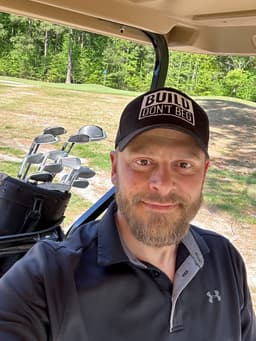
“James Pemberton is the founder and CEO of BookMoreTeeTimes.ai, where he built Fairway Freddie, the revenue recovery concierge, and the national golf course directory it runs on. A Navy veteran with over a decade of experience in SEO, recruiting, and revenue operations, he also leads EngagedHeadHunters.com, an AI-powered RPO engine.”
Fairway Freddie answers every pro shop call
Works alongside the system you already use.
See what Freddie does