RevenueCourse Owners
Are Golf Courses Profitable? Where the Money Comes From and Where It Leaks

October 27, 2026

Are golf courses profitable? Many are, some are not, and the gap between the two often has less to do with the layout than with how many dollars slip away between the first phone ring and the last round of the season. Here is where golf course revenue really comes from, what separates a healthy operation from a struggling one, and the leaks you can close this month.
The honest answer is that it depends on the operating model, the market, and how well a facility captures the demand it already has. No single margin figure fits every course, so treat any blanket number you see online with care.
What the public data does show is a large and growing pie. Census Bureau figures published by the Federal Reserve Bank of St. Louis put total revenue for golf courses and country clubs with employees at about 31.5 billion dollars in 2022, up from about 24.1 billion dollars in 2019.
Demand is strong too. The National Golf Foundation reports more than 500 million rounds played at U.S. courses in each of the past six years, and 2025 marked the fourth record year in the last five.
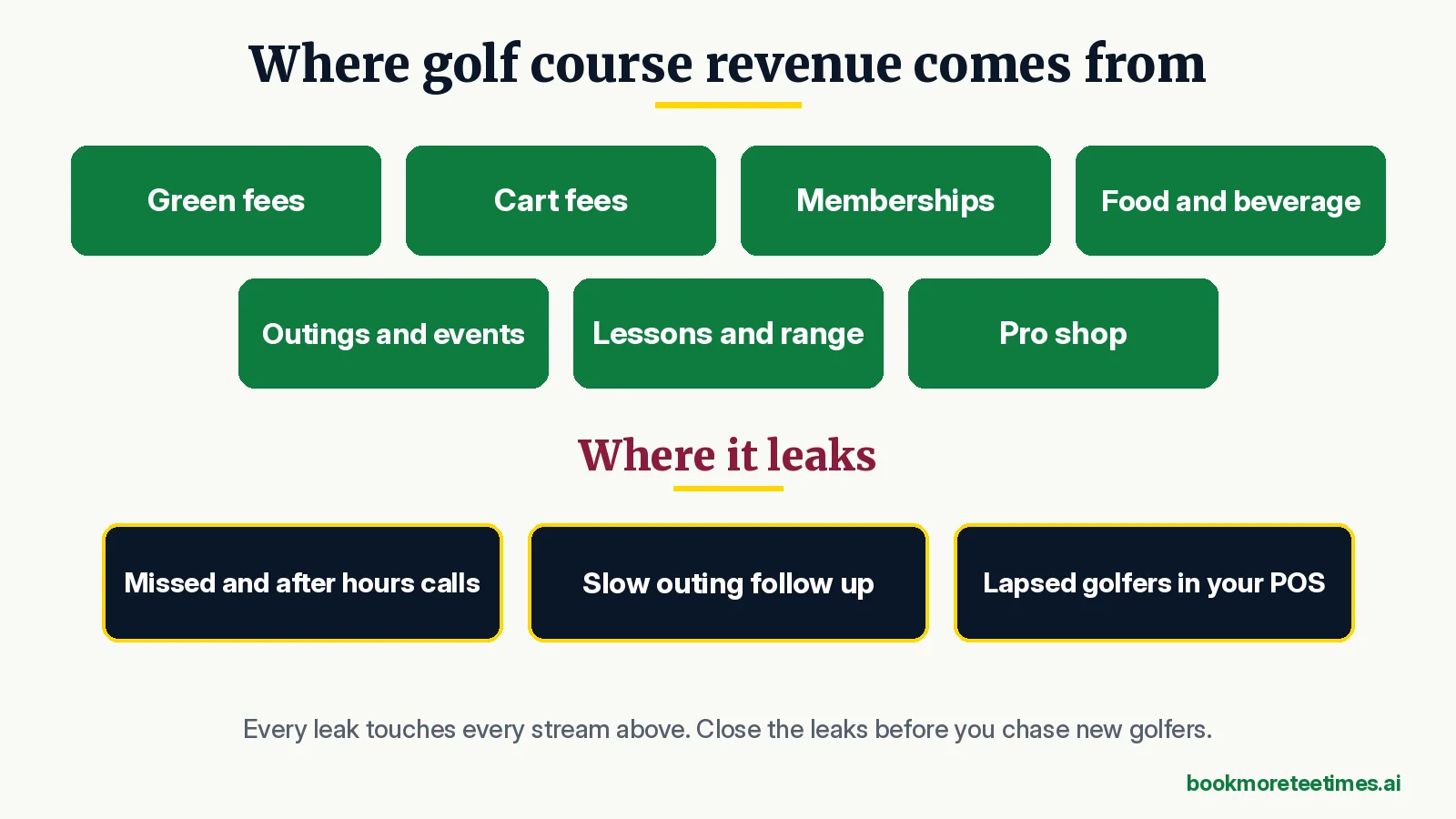
Most facilities earn from a mix of streams. The mix drives profit, because each stream carries a different cost to deliver.
Supply has already been tested. The National Golf Foundation counts about 16,000 courses at 14,000 facilities at the end of 2025, after a contraction of roughly 13% since 2006, with closures concentrated among value priced courses charging less than 40 dollars for a round.
Courses that stay healthy tend to share a few habits:
Most leaks are not dramatic. They are small, daily, and easy to miss, because nobody sees a sale that never happened.
Golfers call when they are thinking about playing, which is often early morning, evenings, and weekends when the counter is slammed or closed. Every unanswered call about a tee time, an outing, or a membership is revenue that can drift to the course down the road. Our guide to an after hours answering service for golf courses walks through how to measure it.
A company outing or charity tournament can be worth more than a full day of walk up play. When that inquiry sits in a voicemail box until Monday, the organizer may already have signed somewhere else.
The National Golf Foundation counts 21.2 million Americans who did not play golf in 2025 but say they are very interested in playing on a course, and almost half of them are lapsed golfers who have played before. Some of those former players are already in your system. A personal golf database reactivation text campaign is one of the lowest cost ways to invite them back.
Example only. Swap in your own numbers. Say your shop misses 10 calls in a week and 3 of them were golfers trying to book a foursome at a 50 dollar green fee. That is 12 rounds and 600 dollars in green fees alone that week, before carts, food, or the next visit those golfers would have made.
The fastest way to find your real number is to pull last week's call log and count the calls that rang out or went to voicemail.
Fairway Freddie answers your rollover and after hours calls so golfers reach your course instead of voicemail. He answers common questions from the details you give him, captures the caller's name, number, group size, and preferred time, and texts a summary to your pro shop. He does not book tee times. Your staff books.
Want to see what your phone gap is worth? Book a 15 minute call and we will walk through your call data together.
They can be. Profit depends on the market, the rate you protect, your cost structure, and how well you capture demand across every revenue stream. Courses that track revenue by stream and answer every inquiry put themselves in a stronger position.
It varies widely by size, location, and model, so no single figure applies. As a national reference point, Census data published by FRED shows golf courses and country clubs with employees brought in about 31.5 billion dollars in total revenue in 2022.
At many public courses, green fees and cart fees from rounds played are the core. Private clubs lean more on dues. Food and beverage, outings, lessons, and merchandise round out the mix.
Start by capturing the demand you already have. Answer every call, respond to outing inquiries the same day, and invite lapsed golfers in your database back with a personal message.
No. Fairway Freddie answers calls, captures the golfer's details and request, and texts your team. Your staff books.

“James Pemberton is the founder and CEO of BookMoreTeeTimes.ai, where he built Fairway Freddie, the revenue recovery concierge, and the national golf course directory it runs on. A Navy veteran with over a decade of experience in SEO, recruiting, and revenue operations, he also leads EngagedHeadHunters.com, an AI-powered RPO engine.”
Fairway Freddie answers every pro shop call
Works alongside the system you already use.
See what Freddie does